
How Long Do UV DTF Prints Last? Durability Explained
Author : KingJet
2026-05-16
If you are considering using UV DTF stickers, labels, or decorative graphics, the first question you probably want to know is: how long do UV DTF prints last? There is no standard answer to this question, but with suitable materials, correct production processes, and reasonable usage conditions, UV DTF prints can often maintain a relatively long service life, especially in indoor applications where they perform more stably, lasting up to 3–5 years.
This article will systematically answer this question from multiple perspectives, including lifespan range, influencing factors, and different application scenarios, helping you better determine whether UV DTF products are suitable for your application.
Table of Contents
What Is UV DTF Printing?
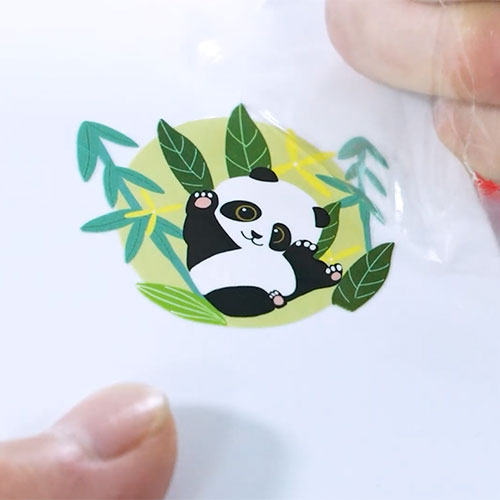
UV DTF (UV Direct to Film) printing is a decorative method that prints designs onto transfer film through UV printing technology and then transfers the design onto the target surface by means of sticker transfer. It combines strong visual appeal with a relatively flexible range of applications, and is commonly used on cups, glass, plastic, metal, electronic casings, gift packaging, signage stickers, and more.
Compared with ordinary stickers, the advantages of UV DTF prints are usually:
The design is more three-dimensional, with stronger visual layering.
The surface texture is clearer, and the details are reproduced more accurately.
It is suitable for small-batch customization and personalized production.
Under suitable conditions, adhesion and durability are usually better than ordinary paper-based or some adhesive products.


How Long Do UV DTF Prints Last?
From a practical application perspective, the service life of UV DTF prints can generally be understood in several levels:
Light indoor use: usually can remain for a long time, with good appearance stability.
Frequently handled items: such as cups, packaging, and tool casings that are often picked up or wiped, will have a noticeably shorter lifespan.
Long-term outdoor exposure: if exposed to sunlight, rain, temperature changes, and dust for a long time, aging will occur more quickly.
Frequently cleaned surfaces: if strong cleaning agents or high-temperature cleaning are used often, the edges of the design are more likely to curl, fade, or peel off.
In other words, the “lifespan” of UV DTF stickers is not a fixed number of years, but a result that is strongly related to how they are used. You cannot just look at the material name; you also need to see where it is applied, how it is used, and whether it is properly maintained.
Performance of UV DTF Stickers on Different Materials
The actual lifespan of UV DTF transfer stickers may vary significantly when applied to different materials. Generally speaking, well-made UV DTF sticker designs can usually maintain a good appearance for 2–3 years, and even 3–5 years; while in scenarios with frequent friction, frequent cleaning, or more outdoor exposure, the actual lifespan may be significantly shortened. Below, we will look at the performance of UV DTF on mugs, glass, phone cases, and cups separately.
How Long Does UV DTF Last on Mugs?
UV DTF stickers generally perform quite stably on mugs, especially for personalized mugs, gift mugs, and branded custom mugs. If the mug is mainly used for daily drinking and is hand-washed, not soaked for long periods, and not cleaned in a high-temperature dishwasher, the UV DTF design can usually remain in good condition for around 2–3 years, and in some milder usage environments, even longer.
How Long Does UV DTF Last on Glass?
Applying UV DTF transfer stickers to glass is usually one of the most ideal material choices. The glass surface is relatively flat, smooth, and stable. As long as proper cleaning and degreasing are done before application, UV DTF usually adheres well, and the edges of the design are more likely to remain intact.
Under normal indoor use, UV DTF applied to glass can usually last 3–5 years. If glass products are mainly used for decoration, display, gift packaging, or low-frequency use, the design can often remain stable for a long time. Compared with some surfaces that are more prone to wear, glass is more friendly to UV DTF and is therefore more suitable as a carrier for high-quality visual presentation.
How Long Does UV DTF Last on Phone Case?
The lifespan of UV DTF on a phone case is usually more affected by usage habits than on glass. Phone cases are high-contact products, and in daily use they are often placed in pockets or bags and rubbed against desks, palms, keys, and other objects. Therefore, the durability of the design often depends more on the material itself and daily maintenance.
If the phone case surface is flat and the pre-application treatment is done properly, UV DTF stickers can usually maintain a good condition on a phone case for around 2–3 years; if the use frequency is low and friction is minimal, it may even approach 3–5 years. However, if the phone case is frequently scratched, dropped, or made of a softer material with poorer adhesion, the lifespan of the design may be significantly shortened.
How Long Does UV DTF Last on Cups?
The actual lifespan of UV DTF stickers on cups is usually similar to mugs, but the scope is broader, and performance varies greatly depending on the material, use, and handling method. For example, plastic cups, stainless steel cups, glass cups, and travel cups all affect UV DTF stickers differently.
If it is a daily drinking cup, insulated cup, or travel cup, under normal use and reasonable maintenance, UV DTF stickers can generally maintain stable performance for around 2–3 years; if the cup has a flat surface, moderate usage frequency, and is mainly hand-washed, it may even reach 3–5 years. Conversely, if the cup is frequently filled with hot drinks, cleaned often, or kept in a humid environment for long periods, the edges of the design are more likely to show wear, whitening, or partial peeling.
Key Factors Affecting the Lifespan of UV DTF Stickers
The Quality of UV DTF Consumables
The durability of UV DTF prints first depends on whether the base consumables (UV DTF AB film and UV ink) are stable. High-quality consumables usually perform as follows: stronger adhesive layer, more even ink layer, less likely to crack, neater design edges, and more stable transparent base film and transfer layer.
If the consumables themselves are of poor quality, even if the initial result looks good after application, problems such as edge lifting, peeling, and obvious scratches may appear in a short period of time. Many users think the problem is that “the printing process is not good enough,” but in fact the issue often starts with poor raw material quality.
UV DTF Printing and Curing Process
The reason UV DTF stickers can form strong adhesion lies in whether the UV curing process is sufficient, even, and stable. If the curing is inadequate, the coating may have the following problems: a sticky or brittle surface, weak adhesion at the edges of the design, easier delamination after long-term use, and reduced color stability.
Professional printing processes affect not only lifespan but also the overall visual quality. A high-quality UV DTF product should achieve a balance between design clarity, layering, and durability, rather than pursuing only a “good-looking” appearance.
The Surface for Application
The material onto which the product is applied has a major impact on the lifespan of UV DTF prints. Generally, flat, clean, smooth, and dry surfaces are more conducive to long-term adhesion. On the other hand, the following conditions will significantly reduce lifespan: oil, dust, or moisture on the surface; the material itself being too rough; excessive curvature causing incomplete adhesion; unstable surface coating, which is easy to peel off.
For example, the same UV DTF sticker will usually perform more stably on glass or smooth metal than on low-quality plastic surfaces. In other words, when choosing a product, you should not only look at the design effect, but also consider whether it is suitable for the material you want to apply it to.
The Usage Environment
The environment is one of the core factors determining the service life of UV DTF prints. The environments with the greatest impact include:
Direct sunlight: UV rays accelerate fading and aging.
Humid environments: long-term moisture weakens adhesion stability.
High-temperature environments: affect the adhesive layer and coating structure.
Frequent changes between hot and cold: can easily cause edge shrinkage or lifting.
Chemical cleaning agents: some cleaning liquids can erode the surface of the coating.
If your product is mainly used for indoor display, its lifespan is usually more ideal than in outdoor applications. Conversely, if you plan to use UV DTF stickers in outdoor or high-temperature exposure environments, you must evaluate their weather resistance more carefully.
Conclusion
In general, the actual service life of UV DTF stickers does not have a unified fixed number of years, but depends on multiple factors such as consumable quality, application surface, usage environment, and daily maintenance. Usually, if the product quality is stable, the application is proper, and it is used in indoor or low-wear scenarios, UV DTF prints can often maintain a good appearance for 2–3 years or even longer; if applied to more stable surfaces such as glass and cleaned properly, the lifespan may be further extended to 3–5 years.
To learn more about UV DTF printing, please consult the professional KingJet team with 18 years of experience in the printer industry. We will provide you with exclusive services. Contact KingJet Now
FAQ
Are UV DTF prints waterproof?
UV DTF prints usually offer a certain level of water resistance, but whether they can remain water-resistant over time depends on the material quality, curing process, and the quality of the application surface. Short-term water contact is generally not a problem, but frequent soaking or heavy cleaning can affect their lifespan.
Are UV DTF prints dishwasher safe?
Yes, they can be. However, to minimize the risk of the sticker peeling off or the design deteriorating, it is essential to use high-quality UV DTF stickers produced with heat-resistant UV DTF consumables.
Please check out the detailed introduction to this article:are UV DTF stickers dishwasher safe?
What materials are UV DTF printing suitable for?
They are usually better suited for flat, smooth, and clean surfaces, such as glass, ceramic, metal, acrylic, and some plastics. Surfaces with a rough texture usually provide weaker adhesion.